

News, publications, blogs
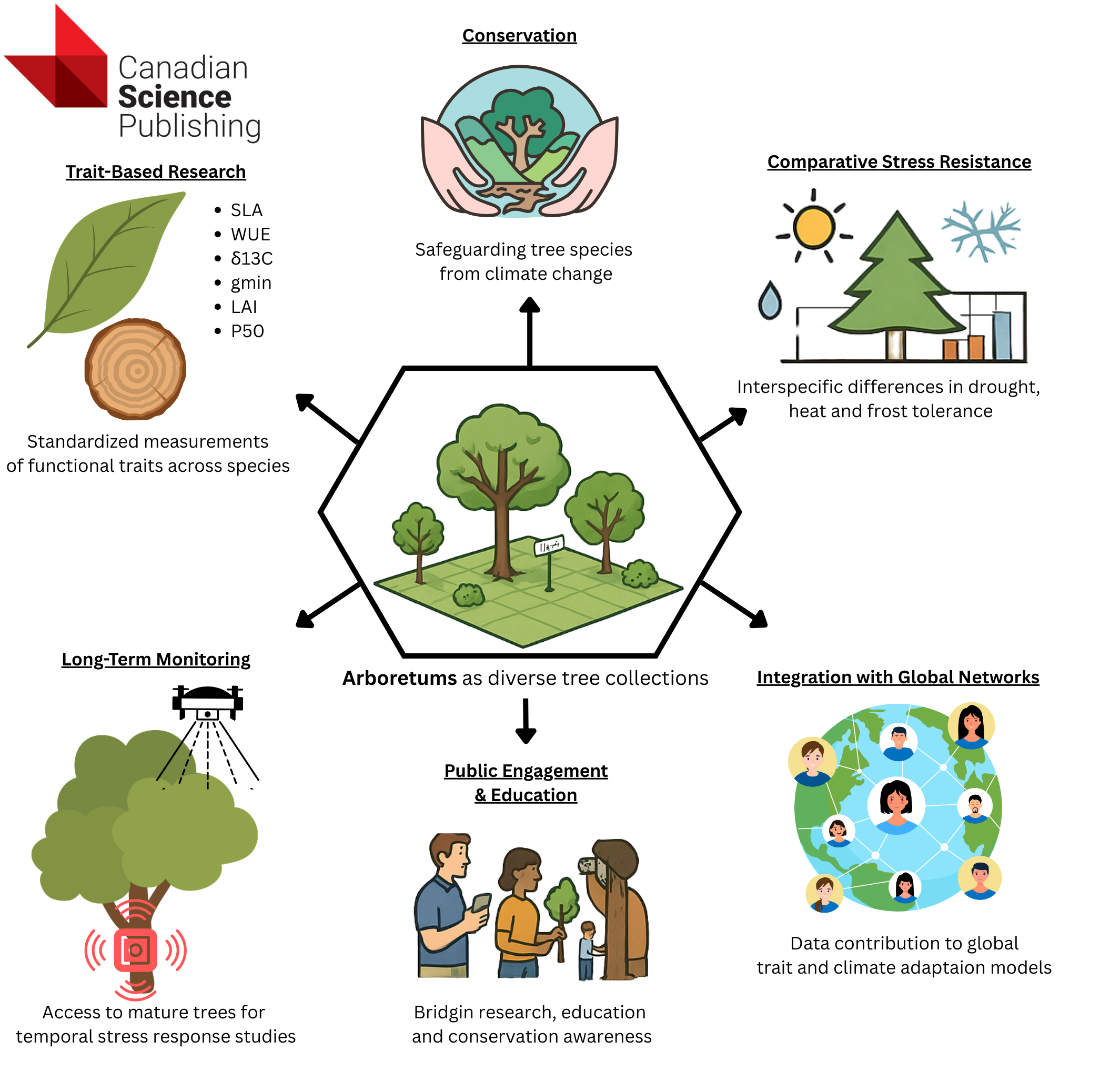
Arboreta as key contributors to understanding climate acclimation and interspecific variability of trees
Our recent perspective paper, published in Botany , highlights the untapped potential of global arboreta as powerful research platforms for understanding how trees and woody plants acclimate to a changing climate.
The paper argues for enhanced coordination and standardised protocols among arboreta worldwide to fully realise their value for ecology, conservation, and climate resilience research, and to support more effective global conservation strategies.
New preprint: Water use and stem diameter variation dynamics of European beech along a hillslope soil moisture gradient
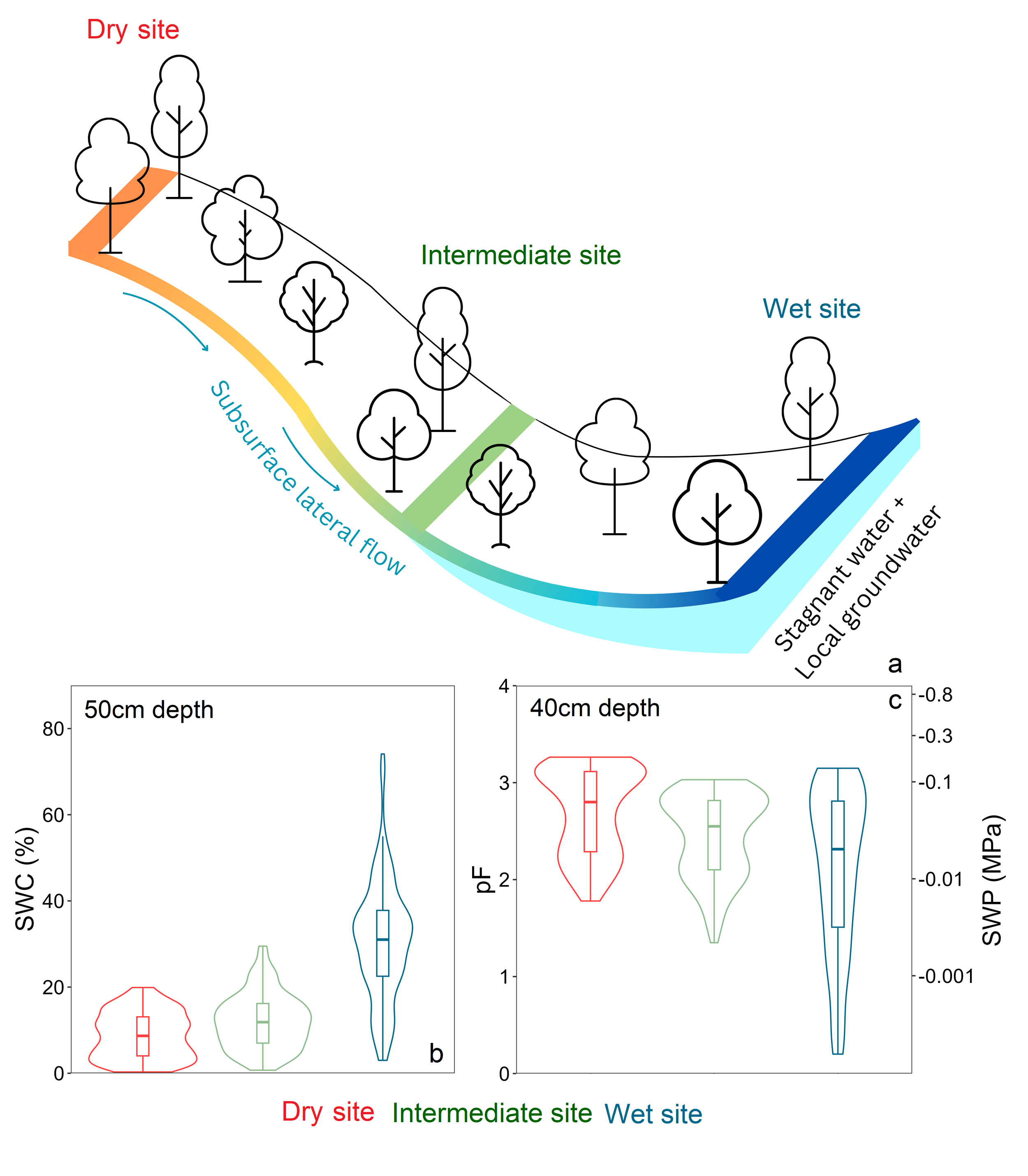
This preprint investigates how microtopography-driven soil moisture heterogeneity shapes water use, stem shrinkage, and growth of European beech. By combining high-resolution sap-flow measurements, dendrometers, and soil matric potential monitoring along a hillslope gradient (Wet–Intermediate–Dry sites), the study disentangles spatial versus temporal controls of tree water relations.
The results reveal a hierarchical regulation of beech water use: daily transpiration is primarily driven by vapour pressure deficit, while long-term cumulative water use and growth are constrained by site-specific soil moisture conditions. Notably, growth peaked under intermediate soil moisture, highlighting that both chronically dry and persistently wet conditions limit productivity.
New publication: Drought-induced changes of water-use efficiency and photosystem II heat tolerance in four drought-sensitive riparian tree species
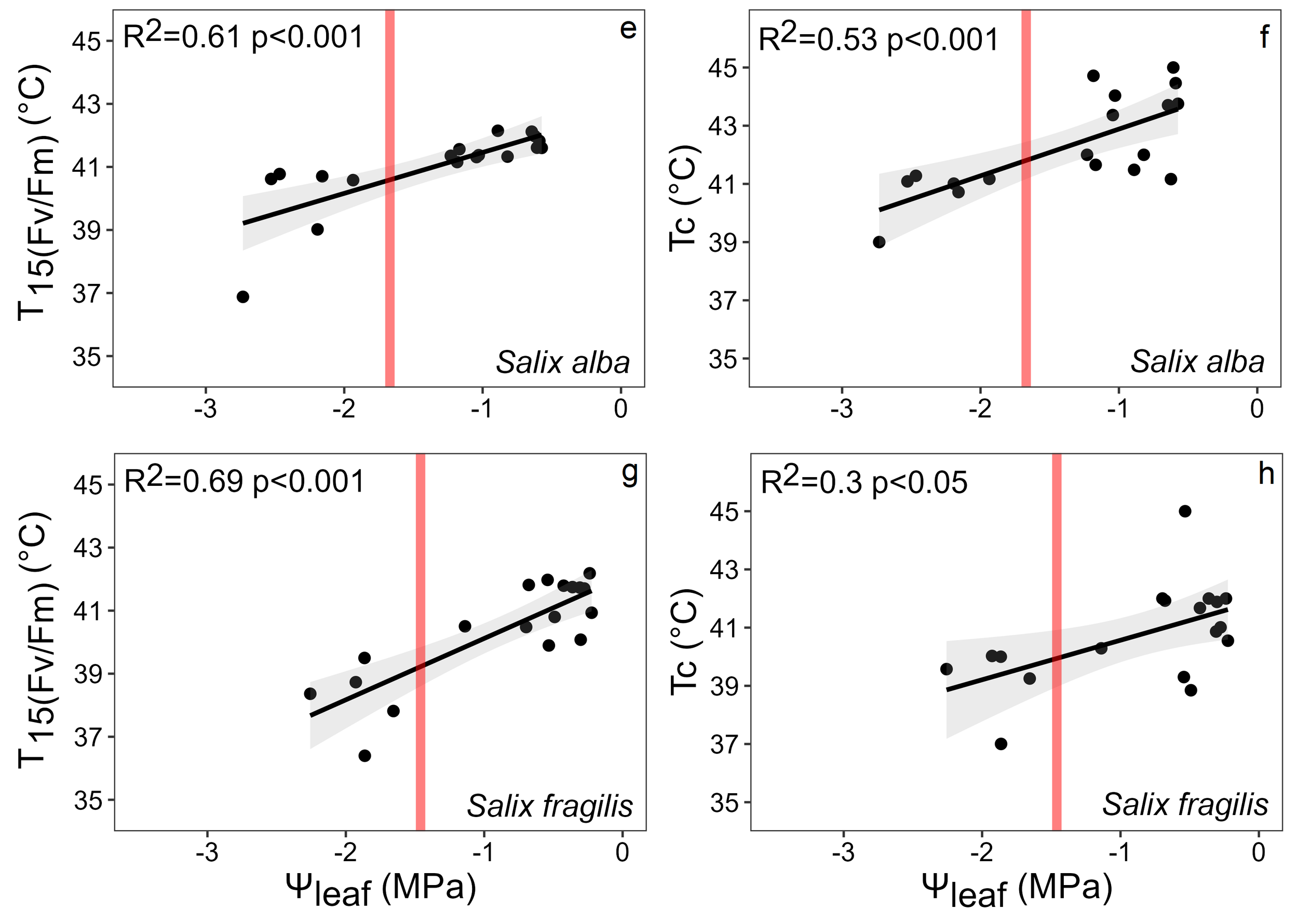
Our recent paper investigates how progressive drought affects two key physiological dimensions of tree stress response: water-use efficiency and photosystem II heat tolerance. The study focuses on four drought-sensitive riparian tree species and explores how declining water availability alters both carbon–water relations and the thermal stability of the photosynthetic apparatus.
One of the main findings was that Salix species showed a reduction in PSII heat tolerance under progressive drought, suggesting that drought can compromise not only plant water relations, but also the ability of leaves to maintain photosynthetic stability under heat stress. These results provide new insight into the vulnerability of riparian trees under increasingly frequent drought and heat events.